Diabetes management
made smarter.
Track your glucose to uncover trends and insights on your sugar levels and understand how your organs are doing over time
Health apps were built to track. BluePin was built to understand.
Why BluePin?
We connect your glucose and health data over time to help you stay ahead of its long-term impact on your organs! Because diabetes is not a simple blood sugar problem :)
Glucose Tracking
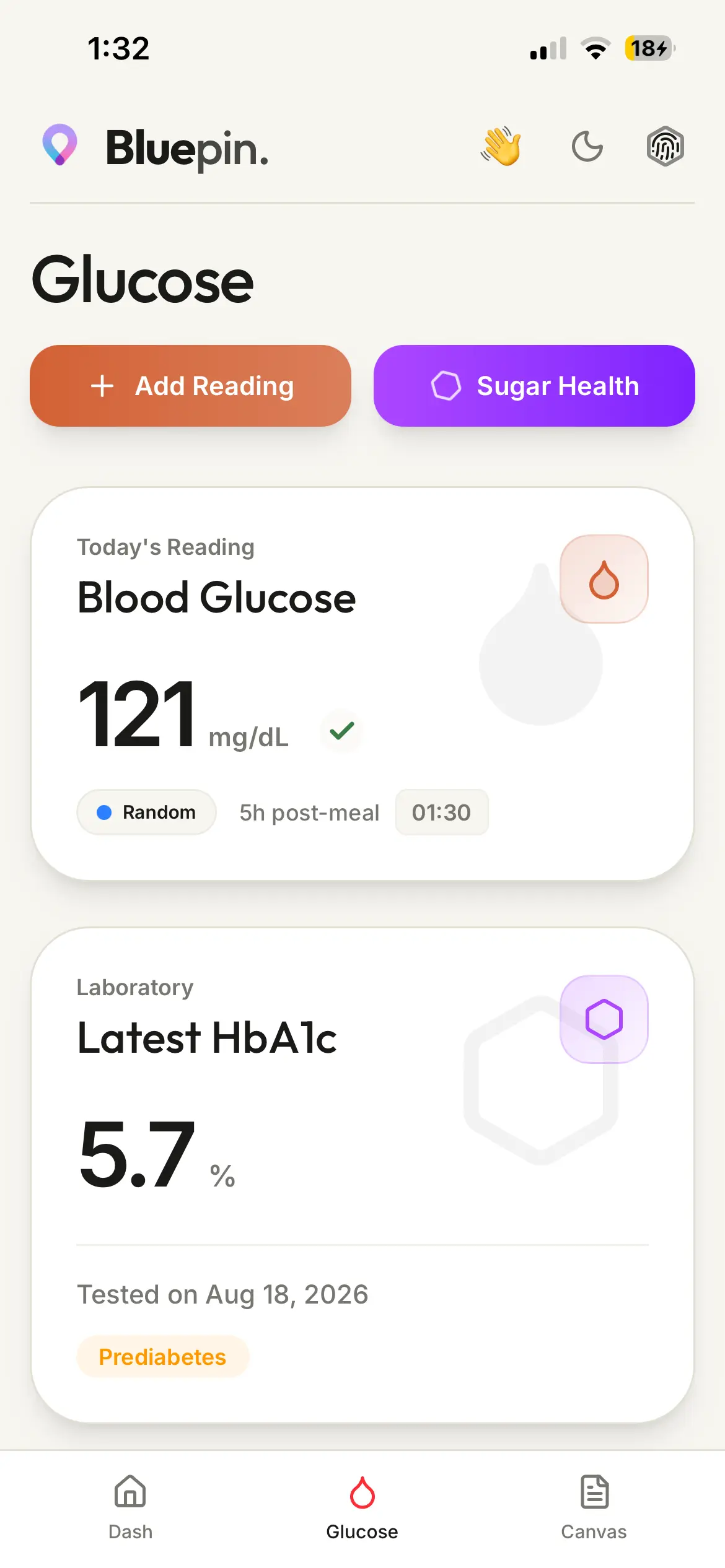
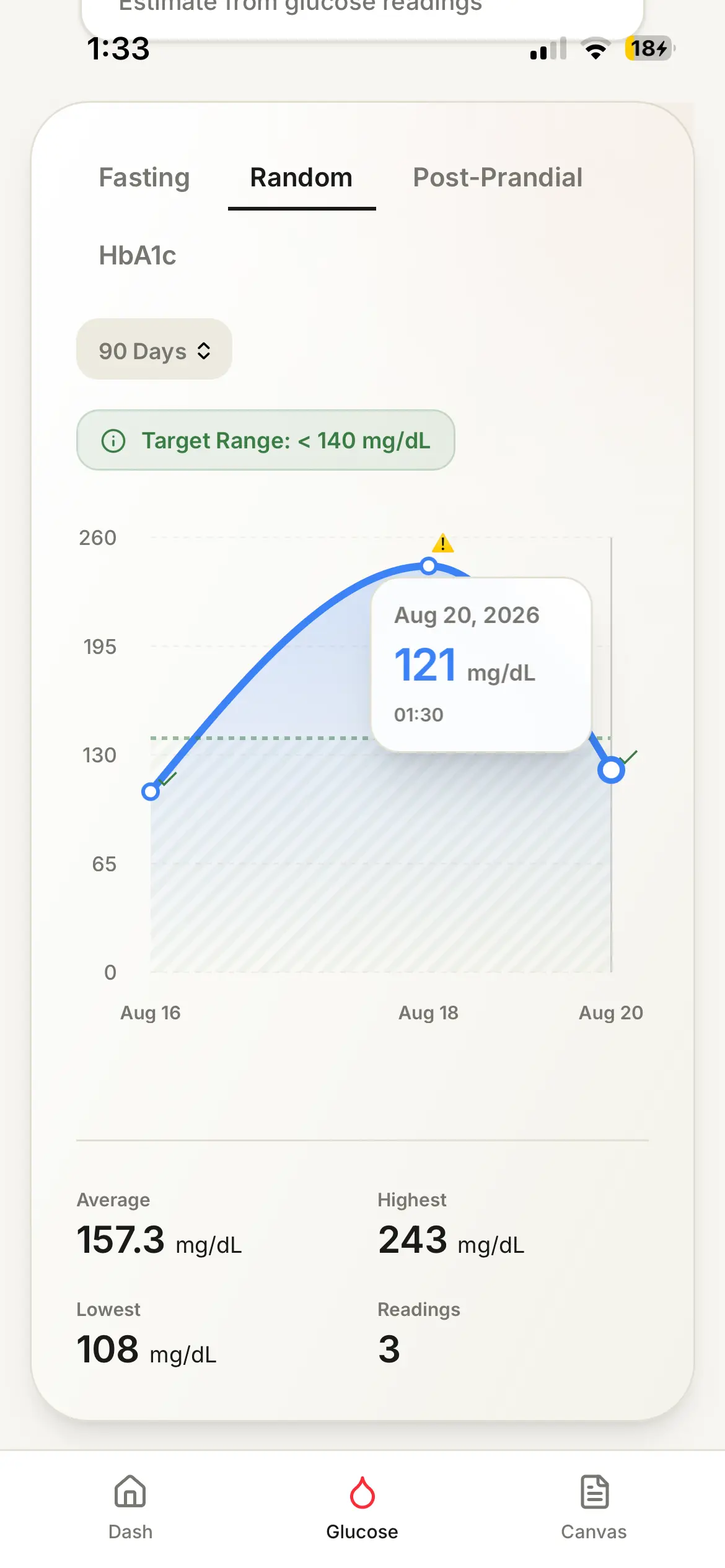
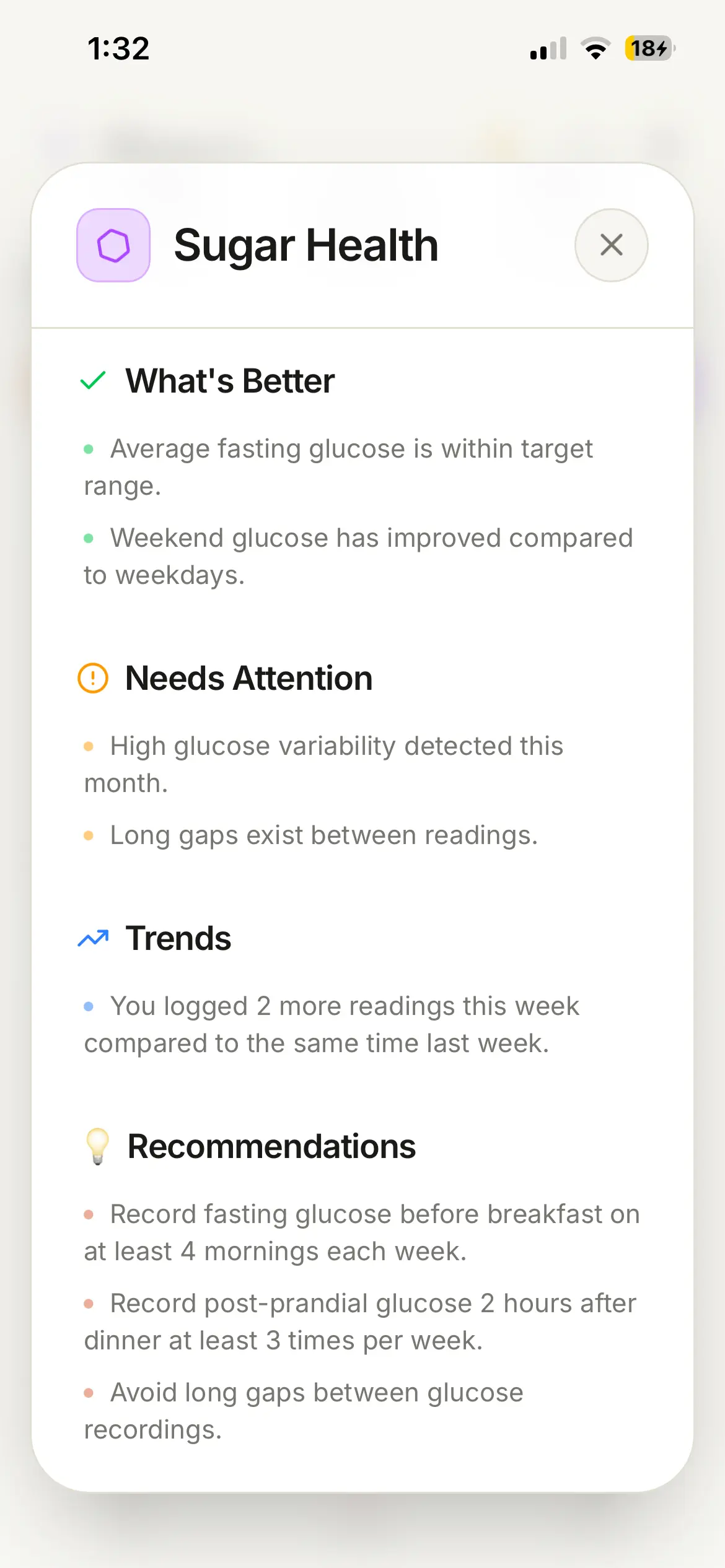
Record your glucose daily manually or by uploading pics of your glucometers. See your glucose behaviour with graph trends and Bluepin-AI powered Insights :)
Health Canvas
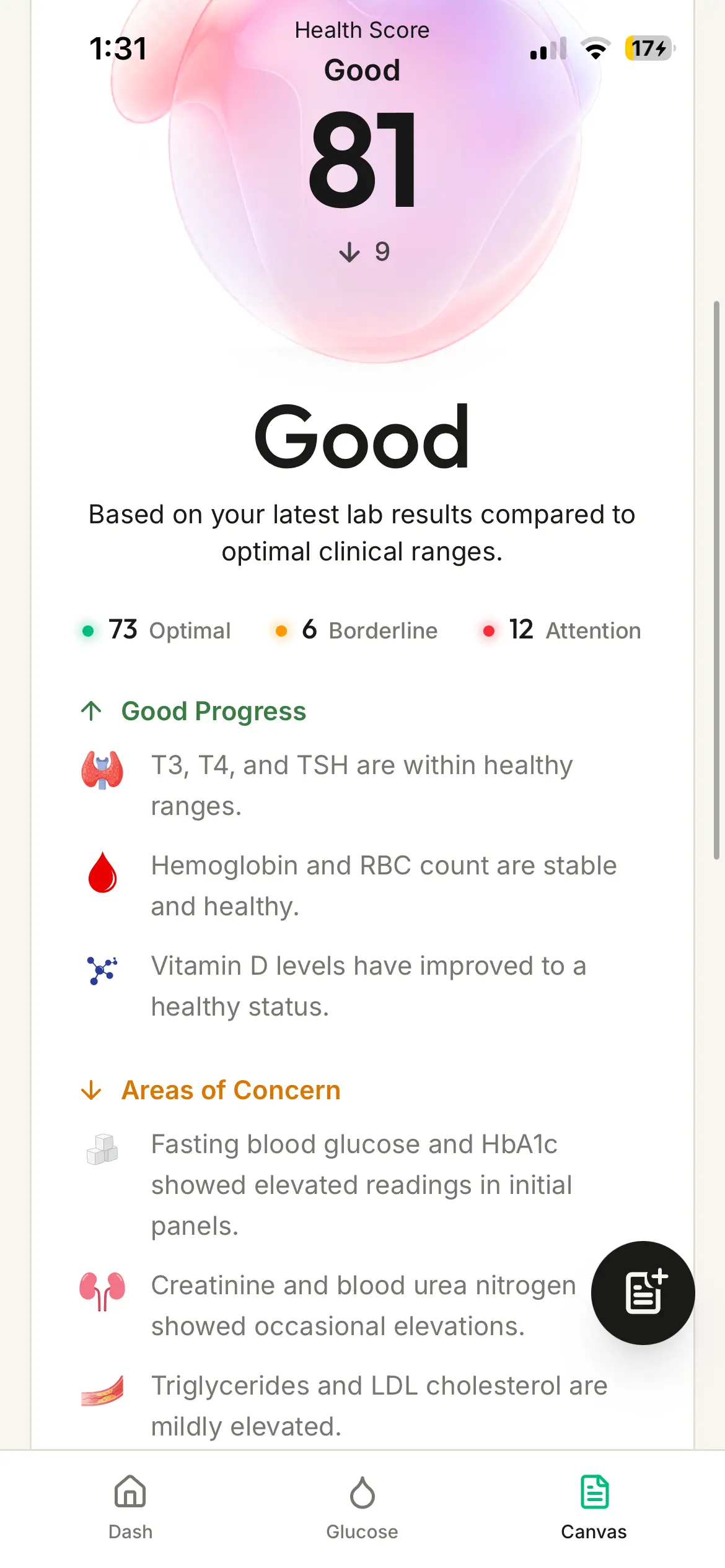
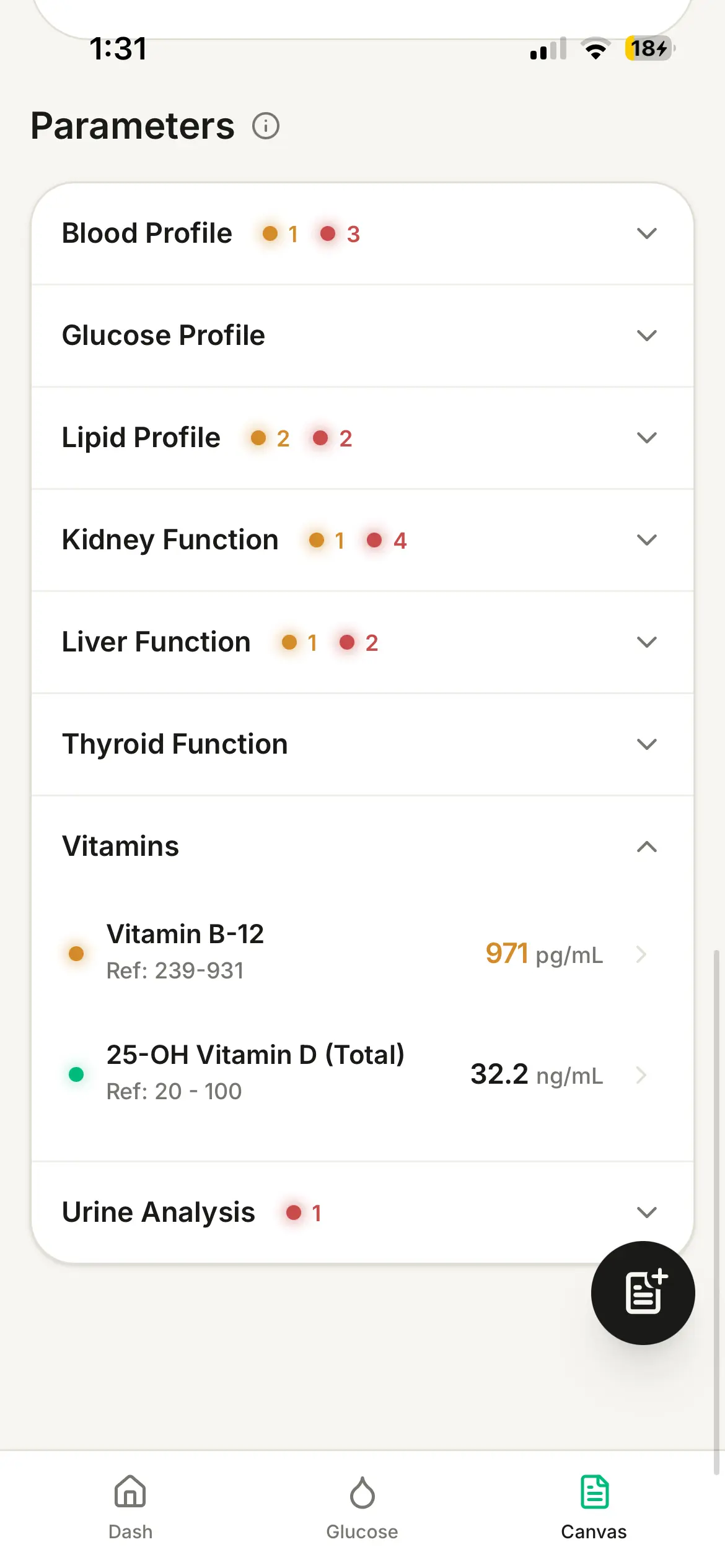
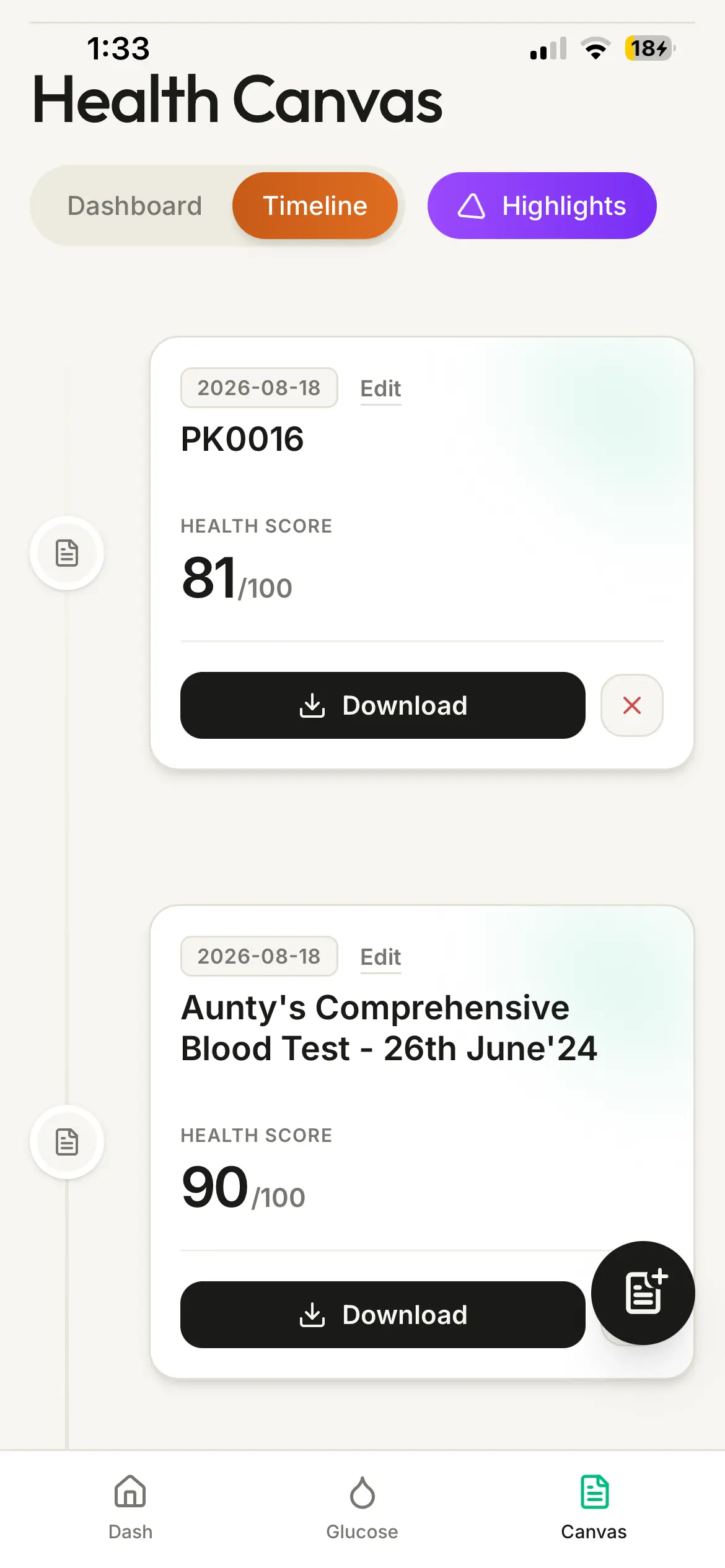
Upload your health reports and see how your organ health changes over time. Uncover patterns with BluePin Intelligence to know which areas need help :)
Why it matters
Diabetes affects your entire body. Most diabetes apps only track your sugar.
CKD
1 in 3
people with diabetes develop kidney disease
Retinopathy
1 in 3
people with diabetes develop diabetic retinopathy
CVD Risk
3X higher
risk of cardiovascular disease
Fatty Liver
65%
of people with diabetes have fatty liver
Neuropathy
50%
of people with diabetes experience neuropathy
Your diabetes care should look
beyond glucose.
How BluePin works
01Add your health data
Glucose readings, blood reports, HbA1c and more.
02Build your health history
BluePin brings your data together over time.
03Discover trends & patterns
BluePin Intelligence connects the dots across your history.
04Get meaningful insights
Understand what's changing and where your health may need attention.
Frequently asked questions
01What is a normal blood sugar level?
For most people without diabetes, a normal fasting blood sugar is 70–99 mg/dL (3.9–5.5 mmol/L). Fasting glucose of 100–125 mg/dL signals prediabetes, and 126 mg/dL or higher on two separate tests signals diabetes. Two hours after eating, blood sugar is normally below 140 mg/dL, with a target below 180 mg/dL for most people with diabetes. Bluepin tracks your glucose trends over time so you can see how your levels behave after fasting, meals, and activity.
02What is a normal HbA1c level?
HbA1c is a blood test that reflects your average blood sugar over the past 2–3 months. A normal HbA1c is below 5.7%. Levels of 5.7–6.4% indicate prediabetes, and 6.5% or higher indicate diabetes. For most adults with diabetes, the treatment target is below 7% (about 154 mg/dL average sugar). Bluepin lets you upload your lab reports and watch your HbA1c trend over time instead of guessing from single readings.
03Can diabetes cause kidney disease?
Yes. About 1 in 3 people with diabetes develops chronic kidney disease (CKD), and diabetes is the leading cause of kidney failure worldwide. Regular urine albumin and eGFR (kidney function) tests help catch problems early, while diabetes is still manageable. Bluepin's Health Canvas tracks your kidney markers over time so you can spot worrying trends before they become urgent.
04Does diabetes cause fatty liver?
Fatty liver disease affects roughly 65% of people with diabetes. High blood sugar and insulin resistance encourage fat to build up in the liver, which can silently progress to liver damage if ignored. Simple blood tests in your routine reports — ALT and AST — are the early warning signals. Bluepin connects these markers over time to alert you to changes in your liver health.
05How does diabetes affect the heart?
People with diabetes face roughly 3 times the risk of cardiovascular disease, and heart disease is the leading cause of death in people with diabetes. High blood sugar damages blood vessels and raises cholesterol, which is why your lipid profile and blood pressure deserve the same attention as your glucose. Bluepin watches these trends together to help you see the full picture of your heart health.
06Is Bluepin free?
Yes — Bluepin is free to get started, with no credit card required. You can record glucose readings by typing them in or snapping a photo of your glucometer, upload your blood reports, and start receiving Bluepin AI insights. There are no hidden charges to begin understanding your health.
07Is Bluepin medical advice? Does it replace my doctor?
No. Bluepin is an educational health companion — not a doctor and not a medical device. It does not diagnose, prescribe, or treat any condition and never replaces professional medical care. Always involve your doctor in medical decisions and never start, stop, or change medication on your own.
08Do I need a CGM or a specific glucometer to use Bluepin?
No. Bluepin works with any glucometer — enter your readings manually or simply take a photo of the meter screen and Bluepin reads it for you. Continuous glucose monitor (CGM) integrations like FreeStyle Libre and Dexcom are on our roadmap and will sync straight into your trend charts.
09How is my health data kept private?
Your health data is encrypted in transit and at rest, stored on secure servers, and never sold — no ads, no data brokers, no tracking for profit. Your information is not used to train public AI models, and you can export or delete your data at any time. Bluepin follows India's DPDP Act for privacy, and you stay in control of what you upload.
10How is Bluepin different from other diabetes apps?
Most diabetes apps only track your sugar. Bluepin connects your glucose, HbA1c, and blood reports over time to show how diabetes may be affecting your organs — kidneys, eyes, heart, liver, and nerves. Health apps were built to track; Bluepin was built to understand.
Bluepin is an educational health companion. It is not a medical device and does not provide medical advice, diagnosis, or treatment. Always consult a qualified doctor for decisions about your health.